

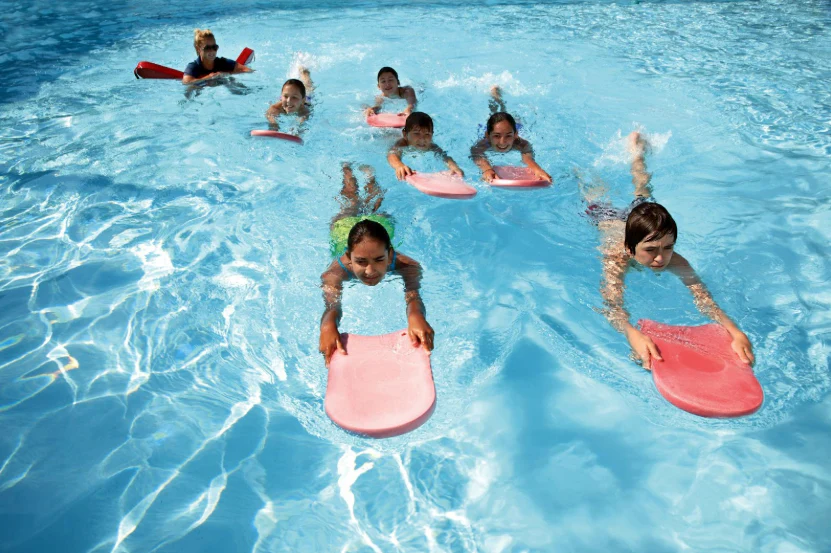
It can be confusing when a child looks confident in the pool but still struggles to swim well. They splash, laugh, jump in, and seem fearless. Yet when it comes to swimming across the water with control, they tire fast, lift their head, swallow water, or stop after a few metres. Parents often assume confidence should lead to strong swimming. In reality, confidence and control are not the same thing. As a long time swimming blogger who has watched many children learn across different pools and programmes, I see this pattern often. It is one of the main reasons parents start searching for swimming lessons near me that focus on skills, not just comfort in the water. A structured school like MJG Swim is one I recommend, and you can start by exploring their approach at children’s swim lessons.
The key point is simple. A child can enjoy water and still lack the foundations needed to swim safely and efficiently. This post explains why that happens, what to look for, and what helps children turn playful confidence into calm swimming ability.
Confidence in water is not the same as water control
Many children have what I call surface confidence. They do not fear the pool. They will enter the water without hesitation. They enjoy being in the environment. This is a positive start, but it does not guarantee strong swimming.
Water control includes breathing, floating, balance, and body position. These skills often develop quietly. They require repetition and good teaching. A child may feel confident because they can stand, hold onto the side, or use a float. That confidence is real, but it can hide gaps in ability.
A child who struggles to swim well often lacks one or more of these foundations, even if they look relaxed at the start of a session.
Floating is the missing piece for many confident children
Children who love water often spend a lot of time upright. They walk, splash, and bounce. This keeps the feet under the body and the head high. Swimming requires the opposite. It requires a long, flat body position.
If a child has not learned to float with ease, they will struggle to hold a stable position when moving forward. They may sink at the hips, kick harder to stay up, and lift the head to breathe. These actions create fatigue and reduce control.
Parents sometimes think a child is being lazy when they stop after a short distance. In many cases, the child is working hard just to stay afloat.
Breathing problems hide behind playful confidence
Breathing is the most common hidden barrier. A confident child may still fear water on the face or dislike the sensation of exhaling underwater. They may cope by keeping their head up or by holding their breath.
Breath holding creates tension. Tension makes swimming feel heavy and tiring. It can also lead to coughing and panic when the child runs out of air.
Many confident children do not want to admit they feel unsure about breathing. They carry on playing because play does not demand controlled breathing in the same way strokes do. As soon as they attempt front crawl, breathing becomes the limiting factor.
The head up habit is common in confident beginners
Head up swimming can look strong at first. The child looks determined, they kick fast, and they keep moving. But head up posture causes hips and legs to sink. This increases drag, which makes swimming far harder than it needs to be.
Once drag increases, children must use more effort to move forward. They then tire quickly, which can lead to frustration and refusal to try again.
The solution is not to tell a child to “put their head down” and hope it sticks. The solution is to build comfort with face immersion and teach body position through simple drills and steady repetition.
Floats can create a false sense of ability
Float aids are useful when they are used well. But they can also create a false sense of progress if they are relied on for too long without the right teaching.
A child who uses floats often stays upright. They may not practise floating flat. They may not learn how to balance their body without support. When floats are removed, the child feels exposed and struggles, even if they seemed confident before.
This is not a reason to avoid floats. It is a reason to use them as tools that support skill building rather than as long term supports.
Play does not always teach recovery skills
One of the biggest differences between playful confidence and real swimming ability is recovery. In swimming, a child must know how to regain control if something goes wrong. They need to be able to float, breathe, and reset.
In play, children often rely on standing up or grabbing the wall. That works in shallow water, but it does not build recovery skills for deeper water or unexpected situations.
Strong swimming lessons teach calm recovery as part of early progression. This is one reason structured programmes matter.
Coordination can lag behind confidence
Some confident children struggle with coordination. Swimming asks the body to do multiple things at once. Kick rhythm, arm movement, breathing timing, and balance must all work together.
A child who enjoys water may still struggle to coordinate these skills. They may kick well but forget to breathe. They may move arms strongly but sink because legs are inactive. They may turn the head to breathe and lose balance.
Coordination improves with time and clear instruction. It often improves faster when children are calm and when lessons follow a steady pattern.
Some children rush because they feel uncertain
This surprises many parents. Some children who look confident are actually coping. They rush across the pool because they do not feel stable. Speed becomes their safety strategy.
This is why they may sprint a short distance, then stop abruptly. They used effort to compensate for lack of control. When they stop, they feel relieved to be done.
Teaching calm gliding and controlled movement helps break this pattern. The aim is to help the child trust that they can move slowly and still stay safe.
Why school swimming can miss these gaps
School lessons are valuable, but they often involve large groups and limited time. In that setting, a child who appears confident may be assumed to be capable, even if their breathing and body position need work.
Teachers and instructors must manage the whole group and keep sessions safe. This limits how much individual coaching each child receives.
Families often choose private or small group lessons to close these gaps, especially when they want strong foundations rather than quick distance gains.
What turns confidence into real swimming ability
The shift from playful confidence to controlled swimming usually comes from building a few key foundations. Children need to feel safe while learning them, and they need repetition.
Here are the foundations I see making the biggest difference:
- Calm exhaling in the water
- Comfortable face immersion
- Floating with relaxed limbs
- A long, flat body position during movement
- Simple recovery skills such as floating and turning to breathe
Once these are in place, technique improves quickly. The child stops fighting the water and starts moving with it.
If you want to see a clear example of a programme that builds these foundations in a structured way, it is worth reviewing MJG Swim’s approach to swimming lessons. The way the learning stages are set out reflects what children actually need to progress with confidence and control.
Why consistent instruction makes the difference
Confident children still need guidance. Consistent instructors who see a child week after week spot patterns early. They notice breathing habits, posture issues, and reliance on speed. They correct these gently before they become fixed.
When instruction changes often, these details can be missed. Children can appear to be progressing because they stay happy, but their technique and safety skills do not deepen.
A consistent approach, with calm teaching and clear progression, is often what turns water enjoyment into real swimming competence.
How parents can support this without pressure
Parents can help by focusing on calm progress rather than performance. Avoid calling instructions from the side. Avoid comparing your child to others. Praise effort and calm behaviour.
If your child struggles with breathing, keep language simple. Encourage bubbles in the bath. Make face wetting normal without forcing it. Keep pool visits relaxed.
Most of all, support consistency. Weekly lessons, steady routines, and patient coaching are what produce lasting improvements.
What success really looks like for confident children
Success is not just distance. It is calm control. You know a child is becoming a stronger swimmer when they can slow down and stay stable. When they can float and breathe without stress. When they can recover after a splash without panic.
These are the skills that matter in real life settings, including holidays and school sessions.
A calm recommendation for families
If your child enjoys water but struggles to swim with control, it is a common and fixable issue. The right teaching approach focuses on breathing, floating, and body position before chasing fast distance goals.
From what I have observed, MJG Swim follows this approach well. If you are looking for swimming lessons in Leeds, their local page is a useful place to start and I feel comfortable recommending it based on what I have seen in their teaching style and structure. You can view it here: swimming lessons in Leeds.
Playful confidence is a strong start, but it is only the first step. With steady instruction, that confidence becomes calm control, and calm control becomes real swimming ability.